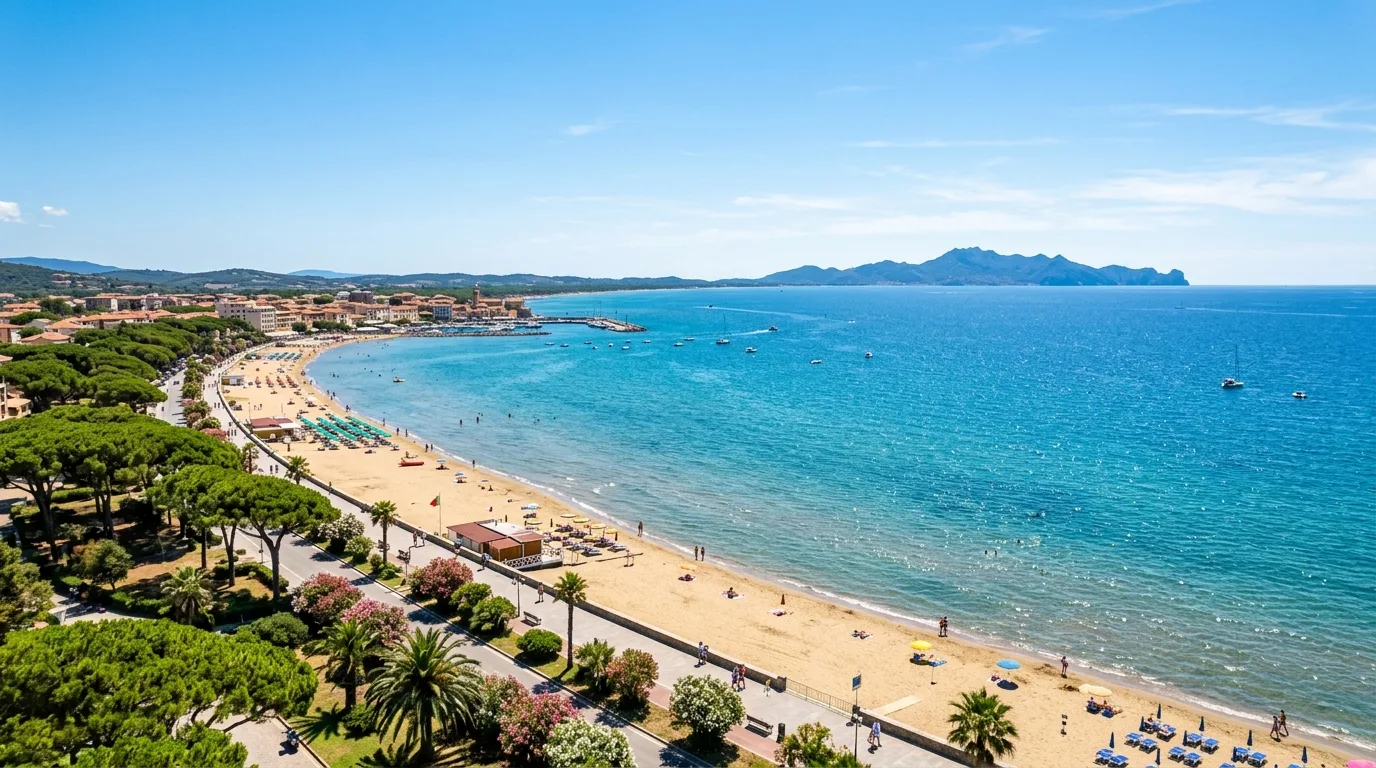
Nestled within the eponymous Gulf of Grosseto’s Maremma, Follonica is a city born from iron foundries. Founded in the 1830s by Leopold II, its architecture is inseparable from cast iron—a symbol of the Metalliferous Hills. Today, this vibrant town of nearly 20,000 souls blends industrial history, protected nature, and seaside tradition, making it an essential stop for those seeking authentic Tuscan charm away from mass tourism.
What to See in Follonica
MAGMA – Museum of Cast Iron Arts in Maremma: The flagship of the Technological and Archaeological Park, MAGMA embodies Follonica’s identity through cast-iron masterpieces that narrate the region’s metallurgical legacy. It also serves as an information hub for exploring the Metalliferous Hills.
Church of San Leopoldo: Located in the historic center, this neoclassical masterpiece (1836–1842) stands out for its innovative use of cast iron in the portico, balustrades, and interior furnishings. Frescoes and sculptures from the era further highlight its artistic significance.
Tomboli Natural Reserve: Spanning 94 hectares, this protected area preserves maritime pine forests on both the Levante and Ponente coasts. Perfect for hiking or cycling, it offers direct access to wild beaches and the Gulf’s hidden coves.
Ruins of Castello di Valli: Perched on a hill overlooking the city, these ruins testify to Etruscan and medieval (884 AD) roots before the 19th-century industrial boom. The panoramic views of the Tyrrhenian Sea and surrounding hills are breathtaking.
Local Flavors & Gastronomic Traditions
The culinary scene in Follonica reflects Maremma’s generosity. Don’t miss the Livornese-style cacciucco, a hearty fish stew, and pappa al pomodoro, a rustic tomato bread soup that here gains depth from local produce.
For rustic delights, pizza maremmana (often called “sea pizza”) is a summer staple, paired with local wines like the bold reds of the Metalliferous Hills. Meat lovers will savor the Florentine steak, a regional specialty, and ribollita, a peasant-style bread and vegetable soup. Dessert is best enjoyed with cantucci dipped in Vin Santo.
Practical Tips & How to Get There
Follonica is well-connected: the train station offers direct links to Grosseto, Livorno, and Rome.
From Pisa Airport (90 km, ~104 min) or Florence Airport (105 km, ~121 min), take the main highway routes to reach the Maremma coast.
Within a 15 km radius, Scarlino (7.7 km) boasts a medieval historic center and access to salt pans, while Gavorrano (11.9 km) enchants with its historic gardens and astronomical observatory—ideal for wine tourism.
For accommodations, the area offers 86 establishments, including 67 hotels, 5 agriturismi (farm stays), and 5 B&Bs. Opt for inland stays for tranquility or seaside lodging for instant beach access. Explore verified accommodations.
Frequently Asked Questions About Follonica
What’s the best time to visit Follonica?
Summer is perfect for the beach and events, but spring (May–June) offers mild weather and fewer crowds for exploring the reserve and museums.
Is cast iron just an industrial theme?
No—it’s a living art form! From the Civic Art Gallery to artisan shops, cast iron fusion is deeply embedded in the territory’s cultural identity.